English
  Bahasa Melayu
Melaka’s culture dates back over six centuries, where diverse ethnic customs and traditions have been harmoniously blended. The peaceful life enjoyed by the people of Melaka stems from the harmonious coexistence of various ethnic communities, including the Malays, Chinese, Indians, Babas and Nyonyas, Portuguese, Chitty, and Eurasians. Each ethnic group contributes its unique flavour to the identity of Melakans, who are well known for their friendliness.
Each of these communities holds firmly to their traditions, which can be seen in their food, religious customs, festivals, culture, designs, attire, jewellery, and handicrafts.
Today, Melaka has much to offer tourists, including its culture, customs, historical sites, religious festivals, and traditional celebrations in Melaka town, as well as in Alor Gajah and Jasin.
The Malay social structure in Melaka is divided into two systems: Adat Temenggong, where the wife follows the husband’s family, and Adat Perpatih, where the husband follows the wife’s family.
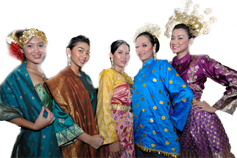
Malay women wear loose, long-sleeved garments called baju kurung, paired with a sarong, or a more fitted top known as baju kebaya. Malay men wear baju Melayu with loose trousers and a piece of cloth known as samping tied around the waist. For weddings and feasts, songket is used as the samping. Other Malay traditions and characteristics are portrayed in songs like Dondang Sayang and in martial arts such as Silat Melayu.
The Chinese have settled in Melaka since the mass migration from southern provinces of China. Ethnic groups such as the Hokkien, Cantonese, Hakka, Teochew, and Hainanese still retain their customs, traditions, cuisine, language, and cultural characteristics.
The Indian community in Melaka consists mainly of Tamils from South India who originally lived on rubber estates. However, many also work in businesses such as jewellery, textiles, retail, trade, and moneylending.
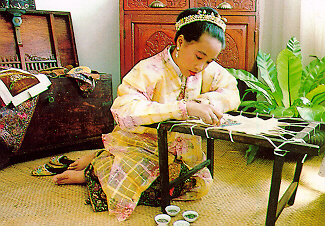
The Baba and Nyonya of Melaka are Peranakan Chinese whose ancestors arrived and married local women. These intermarriages gave rise to a unique Chinese culture infused with Malay traditions.
The Baba and Nyonya introduced unique furniture, porcelain and crockery, distinctive clothing styles, and delicious cuisine that are found only in Melaka. The Nyonya women wear sarong kebaya with variously shaped brooches and jewellery made of silver or gold.
Similar to the Baba and Nyonya, Melaka also has a small community known as the Chitty – Indian Peranakans who are descendants of Indian traders who married Malay women. Their village is known as Kampung Chitty and is located west of Jalan Gajah Behrang, about one kilometre northwest of Chinatown. The entrance is adorned with elephant carvings next to the Mutamariman Temple. Like Kampung Morten, it is a beautiful area to visit and see traditional village houses with Malay architectural features. The best time to visit is during the Mariamman Festival or the Datuk Char-char Festival in May – a Hindu celebration where you might witness a traditional Indian wedding ceremony.
Melaka is the only state with a Portuguese settlement founded in 1930. The residents named it Padre Sua Chang (Priest’s Land) after its founder. The community living there comprises Eurasians of Portuguese descent, many of whom are fishermen. They practise Catholicism and speak Cristang or Cristao.
The Portuguese community in Melaka upholds a unique way of life, language, customs, and music. Their most popular dances include the Beranyo and Frapeirra. Major Christian festivals are also celebrated joyfully, including Christmas, the San Pedro Festival, and Easter.
Religious sites that can be visited include Christ Church, St. Paul’s Church, Sri Poyyatha Vinayagar Moorthi Temple, Kampung Kling Mosque, Cheng Hoon Teng Temple, Kampung Hulu Mosque, St. Peter’s Church, Sam Poh Kong Temple, and Tengkera Mosque.